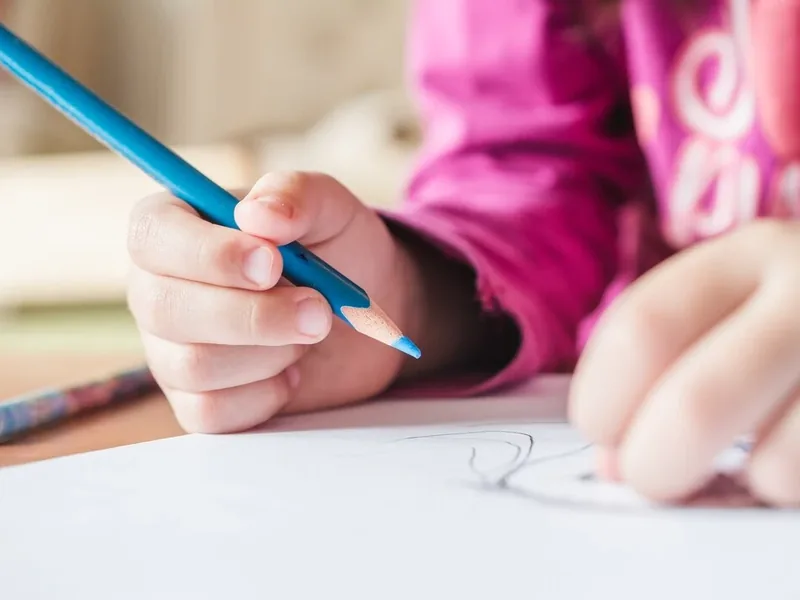
Writing is the end of a chain, not the start of one. The eyes have to track a line and hold a shape in mind. The brain then turns that shape into a plan for the hand, which is the visual-motor part: eyes and hands agreeing on the same thing. The hand needs the strength and finger control to run the plan. And the shoulder and trunk have to stay steady underneath, because a hand cannot be precise on a body that is still holding itself up. If any one link is short, what you see at the kitchen table looks identical: slow, messy, tiring writing.
Which is why more writing practice usually buys effort instead of skill, and often locks in a grip or a letter habit that is harder to undo a year later. A comprehensive initial evaluation works back up the chain: how the eyes track and team up, how well eyes and hand cooperate, whether the letters are stored as automatic movements, and what the shoulder and core are doing while he writes. Then we start at the first weak link rather than the visible one.